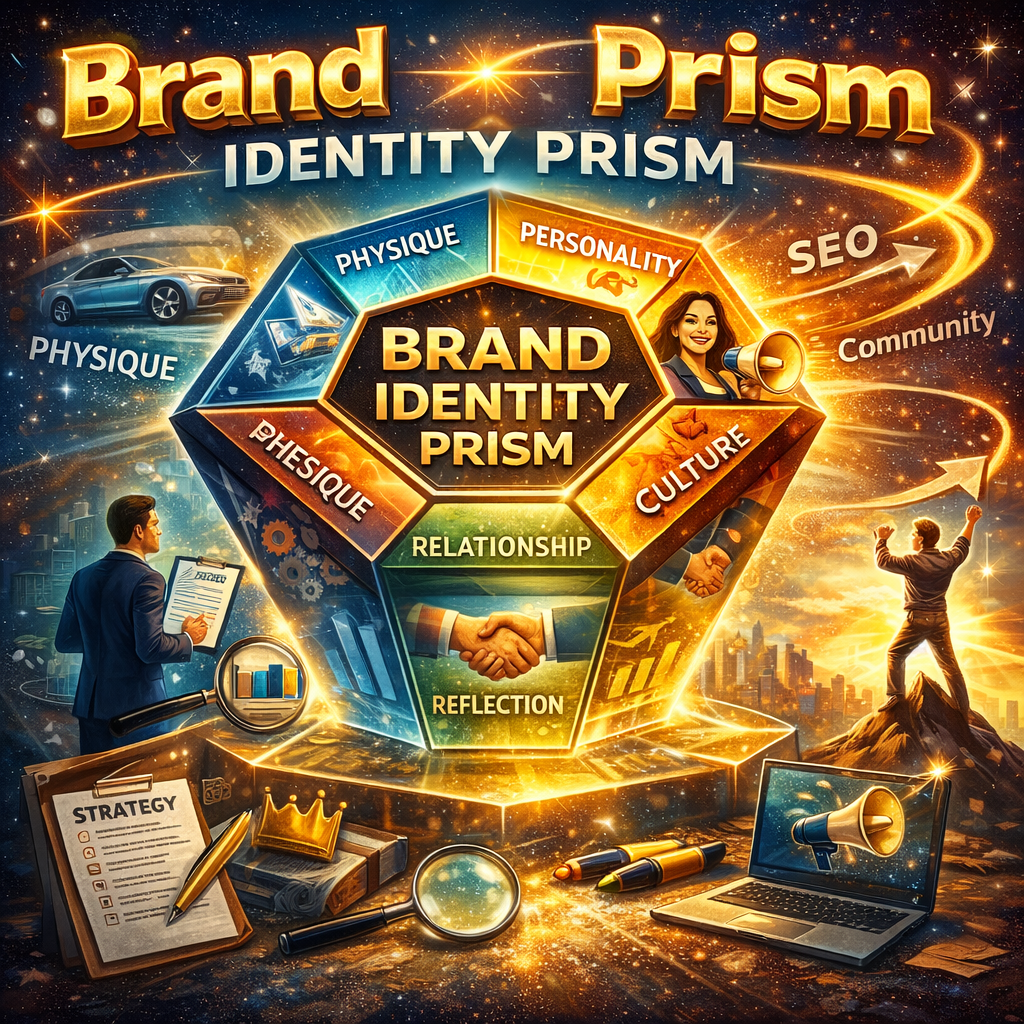
Summary
ブランド/コミュニティ/推奨(Brand, Community & Advocacy)領域で、ブランド・アイデンティティを「内側(文化・価値観)」と「外側(見え方・関係性)」の両面から整合させる設計フレームです。
ブランド・プリズムは「6つの面で“ブランドの人格”を揃える設計図」。
チャネル横断で一貫性が崩れた時や、生成AIでコピーや投稿を量産する運用を始める前に“トーン逸脱を防ぐガードレール”を作る場面で使います。
秀逸ポイント
ブランド・プリズムの強みは、ロゴやスローガンなどの“表層(見え方)”だけでなく、企業文化・価値観(内側)や顧客との関係性、顧客がそのブランドを通じて得たい自己像までを同時に扱える点です。6面をそろえることで、広告・店頭・プロダクト・CS・SNS・コミュニティ運営が「同じ人格」で振る舞えるようになり、推奨(Advocacy)につながる“信頼の蓄積”が起きやすくなります。
さらに実務的に大きいのは、各面の矛盾を発見しやすいことです(例:Cultureで「誠実」を掲げるのに、Relationshipが強引なアップセル寄りで反発を招く)。この矛盾を放置したまま制作物だけ整えると、短期は反応が出ても長期のブランド毀損につながります。
そして生成AI時代は、制作の量とスピードが増えるほど“言葉の揺れ”が増えます。プリズムをブランドの礎(Cornerstone/Stone)として固定化し、トーン&マナーとレビュー基準に落とし込むことで、運用全体のブレを構造的に減らせます。
提唱者・発表時期
提唱者はフランスのマーケティング研究者 Jean-Noël Kapferer(ジャン=ノエル・カプフェレル)です。ブランドを“名前やロゴ”ではなく、長期的に価値を生む資産として捉えるブランド・エクイティの議論が進む中で、ブランド・アイデンティティを体系的に設計・運用する枠組みとして整理されました。
「Identity Prism(ブランド・プリズム)」は、Kapfererの『Strategic Brand Management/The New Strategic Brand Management』系の文脈で広く参照され、6つの面(Physique / Personality / Culture / Relationship / Reflection / Self-image)でアイデンティティを記述するモデルとして知られています。
なお、初出年は二次情報で諸説が見られます。実務では「Kapfererの枠組みとして定着している」ことと、6面の定義に基づいて整合設計・運用へ落とすことが重要です。
詳細説明
ブランド・プリズム(Brand Identity Prism)は、ブランドのアイデンティティを6つの面で言語化し、矛盾なく“統合”するためのフレームワークです。重要なのは「顧客にどう見られたいか」だけでなく、「組織の内側に何が根づいているか(文化・価値観)」と、「顧客がそのブランドを通じて自分をどう感じたいか(自己像)」まで含める点です。
まず押さえる:アイデンティティとイメージの違い
混同されやすいのが、ブランド・アイデンティティ(企業が意図して設計する“自己定義”) と ブランド・イメージ(市場が実際に抱く“他者評価”) です。プリズムは前者(設計図)を作る道具で、後者は調査で検証し、差分を埋めていきます。
| 観点 | ブランド・アイデンティティ | ブランド・イメージ |
|---|---|---|
| 主体 | 企業・ブランド側 | 顧客・社会側 |
| 役割 | “こうありたい”の設計図 | “こう見えている”の現状 |
| 代表アウトプット | ガイドライン、トーン&マナー、体験設計 | 認知・想起、好意、推奨意向 |
6つの面(プリズム)と、運用に落とす着眼点
プリズムの6面は以下です。各面は「文章で定義 → 具体物(ルール・体験)に翻訳」までセットで扱うとブレません。
| 面 | 何を定義するか | 実務での“翻訳先” |
|---|---|---|
| Physique(外観) | 見た目・触れられる特徴 | デザイン言語、UI、商品特徴 |
| Personality(人格) | 話し方・振る舞いの癖 | ブランドボイス、コピーの温度感 |
| Culture(文化) | 価値観・信条・出自 | 意思決定原則、禁則、優先順位 |
| Relationship(関係) | 顧客との関わり方 | 接客/CS方針、コミュニティ運営 |
| Reflection(反映) | “こう見える顧客像” | 表現が映す理想の利用者像 |
| Self-image(自己像) | 顧客が得たい自己認識 | 誇り、所属感、自己効力感 |
「ブランドパーソナリティ」と「トーン」の位置づけ(唐突さをなくす)
ここでいうブランドパーソナリティ(Brand Personality)とは、ブランドに結び付けて想起される「人間らしい性格特性」の集合です。Jennifer Aakerはブランドパーソナリティを「ブランドに結び付けられる人間の特徴」と定義しています。
プリズムの Personality(人格) は、このパーソナリティを“言葉遣い・態度・表現の癖”として運用へ落とす面です。トーン&マナー(トーン) は、その運用を迷わないようにルール化したもの(語彙、語尾、比喩、禁止表現、温度感、例文)で、プリズムの下位に位置する実装物だと捉えると整理しやすいです。
コミュニティ/推奨への接続(Brand, Community & Advocacy)
ブランド・コミュニティ研究では、コミュニティには「共有意識」「儀式と伝統」「道徳的責任」といったマーカーが見られるとされます。
プリズムでいう Culture(価値観)/Relationship(関わり方)/Self-image(自己像) を整えると、これらのマーカーが生まれやすい条件が揃い、結果として推奨(Advocacy)までの距離が縮まります。
生成AI時代の要点:プリズムを“ガードレール(評価軸)”にする
生成AIは制作スピードを上げる一方、文体・比喩・温度感の揺れが起きやすく、ブランドの人格がにじみ崩れます。そこでプリズムは「6面を説明する図」ではなく、AI出力を合否判定する評価軸として使うと効きます。
実務では、(1)プリズムを1枚に圧縮したCornerstone(Stone)→ (2)トーン&マナー → (3)プロンプトテンプレ → (4)レビュー・ルーブリック、まで繋げることで“言いっぱなし”にならず、運用で回収できます。
具体例/活用案
プリズムの目的は「6面をきれいに埋めること」ではありません。目指すブランド像(方向性)を6面で言語化し、戦略・施策・制作物の判断基準として“使い続ける”ことが肝です。つまり“分析結果”ではなく、“意思決定の物差し”を作ります。
そのための進め方(実務で再現しやすい手順)の一例が次です。
棚卸し:Web/広告/営業資料/CS応対/SNS/コミュニティ投稿を集める
6面に分類:どの面を語っているかタグ付けし、言語化する
矛盾を3つに絞る:CultureとRelationship、PersonalityとSelf-imageなど“衝突点”を特定
優先順位を決めて直す:矛盾が顧客体験に直撃する箇所(CS、LP、オンボーディング等)から手を付ける
運用実装:Cornerstone(1枚)+トーン&マナー+レビュー基準を整備し、制作フローに組み込む
生成AIに効く「運用セット」(そのまま社内に入れられる形)
Cornerstone(Stone):6面を各1〜2行に圧縮した“礎”
トーン&マナー:語彙、語尾、比喩、禁止表現、温度感、例文
プロンプトテンプレ:上記を固定で埋め込む(例:Self-imageを必ず満たす条件にする)
レビュー・ルーブリック:6面ごとのチェック項目(Culture違反は即NG、Relationshipの距離感ズレは要修正等)
プロンプト骨格(例):
「以下のブランド・プリズム(6面)を必ず守り、広告文を3案。禁止表現:○○。温度感:落ち着き+知的。Self-imageは“○○”を強化。最後に6面ごとの自己点検コメントを付す。」
公開情報ベースの“読み替え例”(※当てはめは仮説)
Nike:Swooshが主要レースで早期に使われたことや、象徴的なタグライン“Just Do It”(1988年に広く知られる)など、Physique/Personalityの強い一貫性が語られます。
Starbucks:“Third Place(家でも職場でもない第3の場所)”という考え方は、Relationship(関わり方・場の提供)に直結します。店舗体験の設計が、Self-image(そこで過ごす自分)にも影響する、という仮説が立てやすい例です。
Apple Store:ミニマルで統一された空間設計が、Physique(体験としての外観)とPersonality(簡潔で洗練)を結びつける読み替えが可能です(※こちらもプリズムへの当てはめは仮説)。
誤用(やりがちな落とし穴)
Reflectionを“実ターゲット属性”だと誤解:Reflectionは理想化された鏡像。実態は調査で検証が必要。
Personalityを「語尾・丁寧語」だけに矮小化:Cultureと分離すると、生成AI文が“丁寧だが空虚”になりがちです。
Self-imageを“こう思わせたい”と押し付ける:Relationship(体験)が伴わないと、スローガン倒れになります。
プリズムは「表現の整形」ではなく、体験と運用の整合を取る設計図として扱うのが正解です。
すぐ使える問い(Killer Question)
私たちが語る顧客像(Reflection)と、顧客が得たい自己像(Self-image)は一致しているか? ここがズレると“共感”が生まれず、コミュニティ化・推奨まで進みにくい。
Culture(価値観)に反するKPI・販売手法・インセンティブが社内に残っていないか? 価値観の矛盾は現場の言動に先に出て、長期の信頼を毀損する。
生成AIの出力を、Personality(人格)とRelationship(距離感)の基準で“機械的にレビューできる状態”か? 量産が始まるほど逸脱も増えるため、Cornerstone(Stone)+ルーブリックがないと一貫性が崩れる。
参考文献リスト
ブランド・プリズム(Brand Identity Prism)関連
VistaPrint (2025). “The Brand Identity Prism Explained.” https://www.vistaprint.com/hub/brand-identity-prism
How Brands Are Built (2018). “The Brand Identity Prism and how it works.” https://howbrandsarebuilt.com/the-brand-identity-prism-and-how-it-works/
International Journal of Advances in Management and Economics (n.d.). “Exploring Kapferer’s Brand Identity Prism Applicability in Theatre.” https://www.managementjournal.info/index.php/IJAME/article/download/251/240
Conceptboard (n.d.). “Brand Identity Prism Free Template 6 Sections.” https://conceptboard.com/blog/brand-identity-prism-template/
Formpl.us (n.d.). “Understanding Kapferer’s Brand Identity Prism: A Comprehensive Guide.” https://www.formpl.us/blog/understanding-kapferers-brand-identity-prism-a-comprehensive-guide
MDPI – Journal of Risk and Financial Management (2020). “The Impact of Brand Relationships on Corporate Brand Identity and Reputation.” https://www.mdpi.com/1911-8074/13/6/133
ResearchGate (n.d.). “Brand identity prism Source: Kapferer (1992, 1998).” https://www.researchgate.net/figure/Brand-identity-prism-Source-Kapferer-1992-1998_fig1_32011287
Ronins (n.d.). “What Is The Kapferer Brand Identity Prism.” https://www.ronins.co.uk/hub/kapferer-brand-identity-prism/
Litmus Branding (n.d.). “Understanding the 6 parts of the Brand Identity Prism with example.” https://www.litmusbranding.com/blog/understanding-the-6-parts-of-the-brand-identity-prism/
Flux Academy (n.d.). “What Is Brand Identity Prism And How Does It Work?” https://www.flux-academy.com/blog/what-is-brand-identity-prism-and-how-does-it-work
Jean-Noël Kapferer著書
Kapferer, J.-N. (1992). Strategic Brand Management: New Approaches to Creating and Evaluating Brand Equity. London: Kogan Page. https://books.google.com/books/about/Strategic_Brand_Management.html?id=oe9fQgAACAAJ
Kapferer, J.-N. (2012). The New Strategic Brand Management: Advanced Insights and Strategic Thinking (5th ed.). London: Kogan Page. https://www.amazon.com/New-Strategic-Brand-Management-Sustaining/dp/0749465158
Goodreads (1994). “Strategic Brand Management by Jean-Noel Kapferer.” https://www.goodreads.com/book/show/211072.Strategic_Brand_Management
Jennifer Aakerのブランドパーソナリティ
Aaker, J. (1997). “Dimensions of Brand Personality.” Journal of Marketing Research, 34(3), 347-356. https://gsb-courses.stanford.edu/building-innovative-brands/wp-content/uploads/sites/25/2022/04/dimensions_of_brand_personality.pdf
LiveInnovation.org (2021). “Brand Personality: Understanding Aaker’s 5 Dimension Model.” https://liveinnovation.org/brand-personality-understanding-aakers-5-dimension-model/
The Branding Journal (2022). “Brand Personality: Definition, Examples, and How to Define Yours.” https://www.thebrandingjournal.com/2022/08/brand-personality/
SSRN (n.d.). “Jennifer Aaker – Dimensions of Brand Personality.” https://papers.ssrn.com/sol3/papers.cfm?abstract_id=945432
Brandergate Medium (n.d.). “Brand Personality: The Complete Guide.” https://brandergate.medium.com/brand-personality-the-complete-guide-18383f295b58
Nike「Just Do It」キャンペーン
Nike Newsroom (n.d.). “Nike Reintroduces ‘Just Do It’ to Today’s Generation with ‘Why Do It’ Campaign.” https://about.nike.com/en/newsroom/releases/nike-why-do-it-campaign
Creative Review (2012). “The history of Nike’s Just Do It slogan.” https://www.creativereview.co.uk/just-do-it-slogan/
Embryo (n.d.). “The history of Nike’s ‘Just Do It’ campaign.” https://embryo.com/blog/history-of-nike-just-do-it/
The Comm Spot (n.d.). “Marketing & Advertising Case Study: Nike’s ‘Just Do It’ Campaign (1988).” https://thecommspot.com/comm-subjects/strategic-communication/case-studies-in-strategic-communication/marketing-advertising-case-study-nikes-just-do-it-campaign-1988/
Medium – Nehal Maheshwarie (n.d.). “The Power of ‘Just Do It’: A Comprehensive Analysis of Nike’s Iconic Marketing Campaign.” https://medium.com/@nehalmaheshwarie/the-power-of-just-do-it-a-comprehensive-analysis-of-nike-s-iconic-marketing-campaign-8e4adf4a4d0d
NPR (2022). “Just Do It: How the iconic Nike tagline built a career for the late Dan Wieden.” https://www.npr.org/2022/10/06/1127032721/nike-just-do-it-slogan-success-dan-wieden-kennedy-dies
Starbucks「Third Place」コンセプト
Starbucks Stories (2024). “Back to Starbucks: rediscover the power of third places.” https://stories.starbucks.com/emea/stories/2024/reclaiming-third-places-our-bold-vision-for-community-stores/
Starbucks Stories (2025). “Brian Niccol and Howard Schultz on reclaiming the third place and delivering performance through the lens of humanity.” https://about.starbucks.com/stories/2025/brian-niccol-and-howard-schultz-on-reclaiming-the-third-place-and-delivering-performance-through-the-lens-of-humanity/
Fast Company (2008). “Starbucks, ‘The Third Place’, and Creating the Ultimate Customer Experience.” https://www.fastcompany.com/887990/starbucks-third-place-and-creating-ultimate-customer-experience
CNN Business (2024). “A major shift at Starbucks is changing its personality.” https://www.cnn.com/2024/07/19/business/starbucks-mobile-orders-third-place
The Pourover (n.d.). “Starbucks and the Myth of the Third Place.” https://www.thepourover.coffee/starbucks-and-the-myth-of-the-third-place/
Strong Towns (2024). “From Hang Out To Hurry: Why Starbucks Wants To Redefine ‘Third Place’.” https://www.strongtowns.org/journal/2024-8-2-from-hang-out-to-hurry-why-starbucks-wants-to-redefine-third-place
Ray Oldenburg「Third Place」理論
Wikipedia (n.d.). “Third place.” https://en.wikipedia.org/wiki/Third_place
Oldenburg, R. (1989). The Great Good Place: Cafes, Coffee Shops, Bookstores, Bars, Hair Salons, and Other Hangouts at the Heart of a Community. New York: Paragon House.
Eurac Research (n.d.). “Third Places and Why We Need Them.” https://www.eurac.edu/en/blogs/imagining-futures/third-places-and-why-we-need-them-zoe-weisel-mila-miletic
Great Good Place (n.d.). “Starbucked.” https://greatgoodplace.org/starbucked/
Arth Nova (n.d.). “How Starbucks Created a Third Place Between Home and Work.” https://arthnova.com/starbucks-created-third-place-home-work/


コメント